
Call us now :08045475424
 Send Inquiry
 Send Inquiry
Light Calcined Magnesite
MOQ : 5 Tons
Light Calcined Magnesite Specification
- Application
- Industrial applications, water treatment, agriculture, animal feed, refractory, and glass industries
- Purity(%)
- 85% min MgO
- Form
- Powder
- Water Absorption
- Low
- Melting Point
- 2800C
- Chemical Composition
- MgO: 85% min, CaO: 3% max, SiO2: 6% max, Fe2O3: 1% max
- Surface Finish
- Fine
- Usage & Applications
- Glass manufacturing, steel production, agriculture, water treatment
- Density
- 1.2 Gram per cubic centimeter(g/cm3)
- Product Type
- Minerals
- Types of Refractories
- Basic Refractory
- Shape
- Powder
- Porosity
- Low
- Dimensional Stability
- Excellent at high temperature
- Strength
- High compressive strength
- Specific Gravity
- 3.05 g/cm
- Thermal Conductivity
- Good
- Color
- White
- Packaging Type
- 25/50 kg HDPE bags
- Solubility
- Insoluble in water, soluble in acids
- Particle Size
- 200-400 mesh
- pH Value
- 9-10 (in solution)
- Bulk Density
- 0.8 - 1.2 g/cm3
- Loss on Ignition
- <7%
- Storage Condition
- Store in dry and cool place
- Shelf Life
- 24 months from manufacture date
Light Calcined Magnesite Trade Information
- Minimum Order Quantity
- 5 Tons
- Payment Terms
- Letter of Credit at Sight (Sight L/C), Telegraphic Transfer (T/T), Cash Advance (CA)
- Supply Ability
- 5000 Tons Per Month
- Delivery Time
- 1 Week
- Sample Available
- Yes
- Sample Policy
- Contact us for information regarding our sample policy
- Main Export Market(s)
- Australia, North America, Eastern Europe, Western Europe, Africa, Middle East, South America, Asia, Central America
- Main Domestic Market
- All India
About Light Calcined Magnesite
Light Calcined Magnesite (LCM) is a highly reactive form of magnesium oxide produced by calcination of Magnesite Ore at relatively low temperatures (>1000 C).
Our LCM isproduced at our modern manufacturing factory at Dashiqiao in Liaoning provinceand at our Salem based Shaft Kiln Facility through multiple processing andsophisticated calcination of naturally occurring Magnesite Ore and sold worldwide under our brand name SONGMAG.
SONGMAG offers wide range of Light Calcined Magnesite with rich MgO content and balanced activity for numerous applications such as Agricultural, Feed Stock,Fertilizer, Millstones, Emery Stones, Abrasives, Rubber Industry,Pharmaceutical Industry, Waste Water Treatment etc.
SONGMAG Light Calcined Magnesite is available in a wide range of different purities (typically MgO 83 to 92%) and particle sizes such as #200 mesh to #325 mesh.
Specifications
| TYPICAL CHEMICAL ANALYSIS | ||||||||
| Grades | MgO | SiO2 | Fe2O3 | CaO | Al2O3 | LOI | Reactivity (sec) | Mg% content |
| CCM80% | 80% | 6.00% | 1.00% | 3% | 0.50% | 8-9% | 52-55 Sec | 48 |
| CCM 85% | 85% | 4.00% | 0.50% | 2.50% | 0.50% | 6-7% | 55-60 Sec | 51 |
| CCM 90% | 90% | 3.50% | 0.60% | 1.50% | 0.40% | 3.5-4% | 80-100 Sec | 54 |
| CCM 92% | 92% | 3.00% | 1.50% | 1.50% | 0.30% | 2.00% | 100-120 Sec | 55.5 |
Product Size and Packing Details
| Size | #200 mesh or #300 mesh (Min.95% passing) | ||
| Colour | Yellow to White | Origin | China |
| Packing | 25 kg or 50 kg Bags with or without Liners | ||
Versatile Applications Across Industries
Light Calcined Magnesite is widely used in industrial operations such as glass manufacturing, steel production, and refractories due to its excellent high-temperature stability and specific gravity. It also finds applications in water treatment, agriculture, and animal feed, offering solutions for both environmental and production challenges.
Superior Quality and Composition
Boasting a MgO content of at least 85%, low levels of CaO, SiO2, and Fe2O3, and a fine powder form, our magnesite ensures reliable performance. The product features high compressive strength, low water absorption, and a fine surface finish, making it suitable for demanding applications in various sectors.
Optimal Packaging and Storage for Longevity
Packaged in robust 25 or 50 kg HDPE bags, Light Calcined Magnesite maintains its quality over a 24-month shelf life when stored in dry, cool environments. This guarantees users receive consistently high-performance material, minimizing storage-related degradation.
FAQs of Light Calcined Magnesite:
Q: How should Light Calcined Magnesite be stored to maximize its shelf life?
A: Light Calcined Magnesite should be stored in a dry and cool place, away from moisture, to maintain its quality and full 24-month shelf life from the date of manufacture.Q: What industrial processes commonly use Light Calcined Magnesite?
A: Light Calcined Magnesite is often used in glass manufacturing, steel production, refractory applications, water treatment, agriculture, and as an ingredient in animal feed due to its high MgO content and stability at elevated temperatures.Q: When is it advisable to use Light Calcined Magnesite in water treatment?
A: Light Calcined Magnesite is ideal for water treatment applications where pH adjustment, heavy metal removal, or mineral supplementation is required, thanks to its alkaline nature and solubility in acids.Q: Where can Light Calcined Magnesite be purchased or sourced?
A: This product is available from various suppliers, manufacturers, exporters, and importers, particularly from China, specializing in industrial-grade minerals and chemicals.Q: What is the benefit of using Light Calcined Magnesite in refractory applications?
A: Its high melting point (up to 2800C) and low porosity ensure excellent dimensional stability and thermal conductivity, making it particularly beneficial for basic refractory systems operating at high temperatures.Q: How does the particle size and surface finish impact its industrial usage?
A: The fine particle size (200-400 mesh) and fine surface finish enhance its dispersion and reactivity in applications such as coatings, agriculture, and glass production, contributing to higher performance and process efficiency.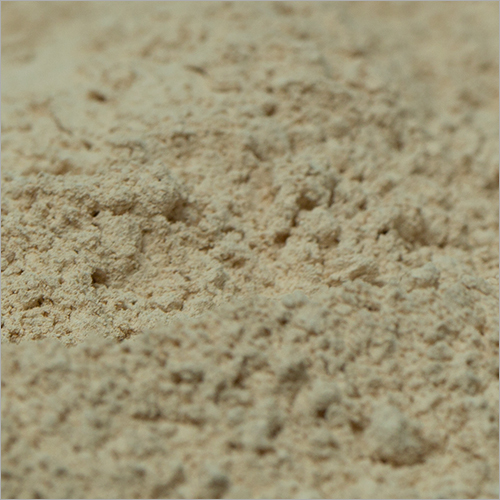
Tell us about your requirement

Price:
Quantity
Select Unit
- 50
- 100
- 200
- 250
- 500
- 1000+
Additional detail
Mobile number
Email


 Send Inquiry
Our Products


BNo 10-20 ,BANGALORE BYE PASS ROADSalem - 636005, Tamil Nadu, India

Mr Prasad Shah
(CEO)
Mobile :08045475424
 Send Inquiry
 Send SMS
Developed and Managed by Infocom Network Private Limited.
